

Most theme park operators focus heavily on attendance. However, attendance alone does not determine profitability. A park that attracts fewer visitors can often generate more profit if it earns more revenue from each guest.
According to industry reports, the global amusement park market is expected to exceed $100 billion by 2026. While visitor demand remains strong, ticket sales alone are no longer enough to support long-term profitability. Many operators focus heavily on attendance numbers. However, attendance alone does not guarantee profit. Two parks with the same number of visitors can produce very different financial results. The difference often comes down to visitor spending, pricing strategy, and operational efficiency. This is where theme park revenue management plays a critical role.
Today, successful parks focus on theme park revenue management. They look beyond gate admissions and create multiple revenue streams throughout the visitor journey. Food sales, premium experiences, memberships, merchandise, parking fees, and special events often contribute significantly to overall profits. In many parks, these secondary revenue sources generate higher profit margins than admission tickets themselves.
Understanding how theme parks make money is essential for owners, operators, and investors who want to improve long-term financial performance.
Table of Contents
What Is Theme Park Revenue Management?
Theme Park revenue management is the process of maximizing income from every visitor while maintaining a positive guest experience. The goal is not simply to attract more visitors. The goal is to increase the value of every visit. This may involve adjusting ticket prices, promoting premium experiences, increasing food sales, or encouraging repeat visits through memberships.
Revenue is the money a park earns. Profit is what remains after expenses are paid. A park can attract thousands of visitors and still struggle if operating costs exceed earnings.
This is why successful operators focus on total guest value rather than ticket sales alone.
For example, a visitor may purchase a $50 admission ticket. During the visit, they may spend another $40 on food, drinks, souvenirs, and parking. In many cases, these additional purchases generate higher margins than the admission ticket itself.
Effective theme park revenue management helps operators increase visitor spending, improve attendance during slower periods, and make better business decisions throughout the year.
How Theme Parks Make Money
Theme parks generate income through several different channels. These revenue streams generally fall into three categories.
Direct Revenue
Direct revenue comes from admission-related purchases. This includes single-day tickets, group bookings, and season passes.
Indirect Revenue
Indirect revenue comes from spending inside the park. Food, beverages, merchandise, lockers, parking, and premium experiences fall into this category.
Recurring Revenue
Recurring revenue creates predictable income throughout the year. Memberships, annual passes, sponsorship agreements, and corporate partnerships are common examples.
| Revenue Type | Examples | Business Value |
| Direct Revenue | Admission tickets, passes | Primary income source |
| Indirect Revenue | Food, retail, parking | Higher visitor value |
| Recurring Revenue | Memberships, sponsorships | Predictable cash flow |
The most successful parks do not rely on a single revenue stream. They build multiple sources of income around the visitor journey. This reduces business risk and increases profitability throughout the year.
Theme Park Business Model or Various Revenue Sources
Top Revenue Sources for Theme Parks
Successful theme parks rarely depend on a single source of income. While ticket sales remain important, today’s most profitable parks generate revenue from multiple visitor touchpoints. Let’s examine the most important theme park revenue sources and how leading operators maximize the value of each one.
1. Ticket Sales
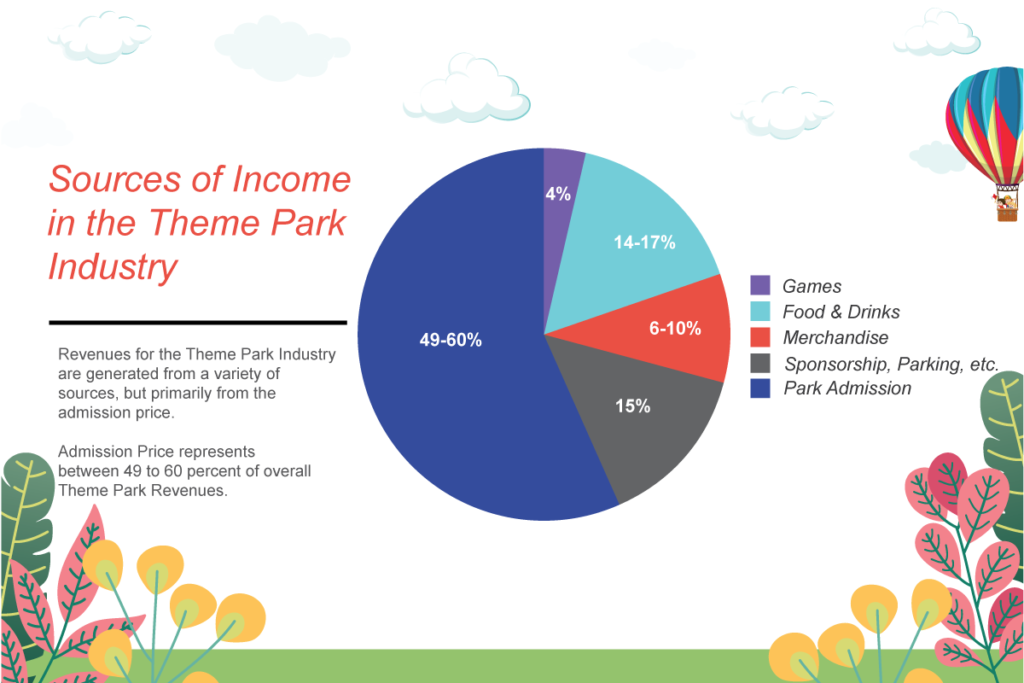
Ticket sales remain the largest revenue source for most parks. Admission fees typically account for a significant share of total revenue.
The model is simple. Visitors purchase access to rides, attractions, and entertainment. For example, a regional amusement park may charge different rates for weekdays and weekends. This allows operators to align pricing with demand.
One effective improvement is encouraging online ticket purchases through small discounts. This reduces ticket booth congestion and improves visitor flow at entry points.
2. Annual Passes and Memberships
Annual passes help convert occasional visitors into repeat customers. Instead of earning revenue from a single visit, parks receive income upfront while encouraging multiple visits throughout the year.
For example, many parks offer monthly membership plans that include discounts on food and merchandise.
A useful strategy is to create membership tiers. Premium members can receive exclusive benefits while standard members continue to enjoy affordable access.
3. Fast Pass and Premium Experiences
Many visitors are willing to pay extra to save time. Premium access programs allow guests to skip regular lines and enjoy faster access to popular attractions.
For example, a water park may offer express access to its most popular slides during peak periods. Limiting the number of premium passes sold each day helps maintain value while protecting the experience for all visitors.
4. Food and Beverage Sales
Food and beverage sales represent one of the most profitable amusement park revenue streams. Visitors often spend several hours inside the park. Most will purchase snacks, drinks, or meals during their visit.
A family visiting for six hours may spend more on food than on admission upgrades. Operators can improve results by offering meal bundles and placing food outlets near high-traffic attractions.
5. Merchandise and Souvenirs
Merchandise allows visitors to take part of the experience home. Common products include branded apparel, toys, souvenirs, and ride photos.
For example, placing a gift shop near the exit of a popular attraction often increases purchase rates.
Parks can improve merchandise sales by creating exclusive products that visitors cannot purchase elsewhere.
6. Parking Fees
Parking generates revenue before visitors enter the park. Many parks charge standard parking fees while offering premium parking closer to the entrance.
For example, a family may willingly pay extra for convenience during busy weekends. Online parking reservations can help reduce congestion while creating additional revenue opportunities.
7. Locker and Equipment Rentals
Lockers, strollers, wheelchairs, and mobility scooters provide steady income with relatively low operating costs.
Visitors value convenience and security while enjoying attractions. Water parks often generate substantial revenue from locker rentals because guests need secure storage throughout the day.
Offering digital locker access can improve convenience and reduce operational issues.
8. Events and Festivals
Seasonal events create new reasons for visitors to return. Halloween celebrations, holiday festivals, food events, and summer concerts attract guests outside normal operating periods.
For example, many parks experience strong attendance growth during special holiday events. Limited-time experiences encourage repeat visits while creating opportunities for additional food and merchandise sales.
9. Corporate Events and Group Bookings
Corporate events help parks generate revenue during weekdays and slower periods.
Businesses, schools, and community organizations often book large groups for meetings, celebrations, or team-building activities. For example, a company may reserve a section of the park for an employee appreciation event.
Offering bundled packages that include admission, catering, and reserved spaces can increase booking value.
8. Sponsorships
Sponsorships provide an additional source of recurring income. Brands pay for visibility through attraction sponsorships, event partnerships, and advertising placements.
For example, a beverage company may become the official drink provider throughout the park.
Long-term sponsorship agreements create predictable revenue regardless of daily attendance levels.
8. Hotels and Resort Packages
Destination parks often expand revenue through hotels and resort accommodations. Guests who stay overnight usually spend more on food, shopping, and entertainment.
For example, a family visiting for three days will likely generate more revenue than day visitors. Bundling accommodations with tickets and dining packages helps increase overall visitor spending.
Revenue Management Strategies Used by Successful Parks
Generating revenue is only part of the equation. The most profitable theme parks actively manage pricing, visitor behavior, and spending opportunities throughout the guest journey.
Here are some of the most effective revenue management strategies used by successful theme parks and entertainment venues today.
1. Dynamic Pricing
Dynamic pricing adjusts admission prices based on expected demand. Higher demand periods support higher prices. Lower demand periods often require promotional offers.
This approach helps maximize attendance while increasing revenue during peak seasons.
2. Visitor Segmentation
Different visitors have different spending habits. Families, tourists, school groups, and pass holders all have unique needs.
Understanding these groups allows operators to create more relevant offers and packages. As a result, visitors receive better value while parks increase revenue opportunities.
3. Upselling and Cross-Selling
Upselling encourages visitors to purchase premium options. Cross-selling promotes related purchases.
For example, a visitor purchasing tickets may also buy parking, meal vouchers, or express access. Small additions can significantly increase total transaction value.
4. Managing Peak and Off-Peak Seasons
Seasonal fluctuations affect nearly every theme park. Successful operators create events and promotions during slower periods to maintain attendance.
Food festivals, school programs, and holiday events help attract visitors throughout the year. More balanced attendance improves staffing efficiency and overall profitability.
5. Increasing Per-Capita Spending
Per-capita spending measures average revenue generated by each visitor. Parks increase this metric through convenient purchasing options, attractive food offerings, and premium experiences.
When visitors spend more during each visit, profitability improves without requiring higher attendance.
Traditional vs Modern Theme Park Revenue Management
| Area | Traditional Approach | Modern Approach |
| Ticket Pricing | Fixed Pricing | Demand-Based Pricing |
| Guest Spending | Passive | Actively Optimized |
| Payments | Cash & Card | Mobile & Cashless |
| Promotions | Generic Offers | Visitor-Specific Offers |
| Reporting | Monthly Reports | Real-Time Visibility |
| Memberships | Annual Passes | Subscription Programs |
Key Metrics Theme Parks Should Track
Monitoring performance helps operators make informed decisions.
| Metric | What It Measures | Why It Matters |
| Revenue Per Visitor | Average revenue per guest | Shows visitor value |
| Average Spend | Average transaction amount | Tracks spending behavior |
| Repeat Visit Rate | Returning visitors | Measures loyalty |
| Membership Renewal Rate | Membership retention | Indicates recurring revenue strength |
| Food and Beverage Revenue | Dining sales | Measures concession performance |
| Merchandise Revenue | Retail sales | Tracks souvenir demand |
These metrics provide a clear picture of both visitor behavior and business performance.
Common Revenue Challenges in Theme Parks
Even the most successful theme parks face operational and financial challenges that can affect revenue and profitability. Understanding these challenges is the first step toward building a more resilient and profitable park operation.
1. Seasonal Demand
Attendance often varies throughout the year. Weather, school schedules, and holidays significantly affect visitor numbers. Operators can reduce this risk through memberships, events, and targeted promotions during slower months.
2. Long Queues
Long wait times reduce visitor satisfaction. Guests spending hours in lines often spend less money elsewhere. Queue management strategies and premium access options can help improve visitor flow.
3. Rising Operating Costs
Labor, utilities, maintenance, and supplies continue to become more expensive. Parks must balance guest satisfaction with cost control.
Regular reviews of staffing schedules and operating procedures help protect margins.
4. Low Visitor Spending
Strong attendance does not always guarantee profitability. Visitors may enter the park but spend very little during their stay. Food bundles, merchandise offers, and premium experiences help increase average spending.
5. Revenue Leakage
Revenue leakage occurs when income is lost through errors, fraud, or poor processes. Examples include ticket misuse, cash handling mistakes, or inaccurate reporting. Clear operational controls help reduce these losses.
How Technology Supports Revenue Growth
Technology supports revenue management by improving convenience and visibility. Online ticketing reduces waiting times and encourages advance purchases. Point-of-sale systems help track food, beverage, and merchandise sales across the park.
Mobile payments make purchases faster and more convenient. Visitors often spend more when transactions are simple. Visitor analytics help operators understand attendance trends, spending patterns, and popular attractions. The goal is not technology itself. The goal is making better business decisions through better information.
Why Integrated Theme Park Management Matters
Many parks operate multiple systems across ticketing, food sales, visitor management, and reporting. When these systems work separately, managers often struggle to see the complete picture. An integrated approach provides better visibility into daily operations.
Managers can monitor attendance, spending, and performance from a single source of information. This improves reporting accuracy, supports better planning, and helps create a smoother visitor experience.
Most importantly, it helps operators identify opportunities to improve profitability.
How Hashstudioz Helps Theme Parks Improve Revenue Management
Many theme parks struggle with disconnected systems for ticketing, payments, visitor access, and reporting. This often limits visibility into revenue performance and guest behavior.
HashStudioz develops amusement park management solutions for theme parks, water parks, and entertainment venues.
The focus is on helping operators manage ticketing, payments, visitor access, and reporting through connected systems.
| Traditional Operations | Integrated Management |
| Manual ticket processing | Digital ticket management |
| Separate reporting systems | Centralized reporting |
| Limited visitor insights | Better visibility into visitor behavior |
| Multiple disconnected tools | Connected operational processes |
By improving visibility and reducing manual work, operators can focus more on guest experiences and business growth.
Conclusion
Attendance brings visitors through the gate, but visitor spending drives profitability. The parks that consistently outperform competitors focus on building multiple revenue streams and maximizing the value of every guest visit.
In today’s market, successful theme park revenue management is not about attracting more people, it is about generating more value from each visitor.
Frequently Asked Questions
1. What is the biggest revenue source for a theme park?
Ticket sales remain the largest revenue source for most theme parks. Admission fees often contribute between 45% and 60% of total revenue, depending on the park’s business model.
2. How do theme parks increase revenue?
Theme parks increase revenue through pricing strategies, premium experiences, food sales, merchandise, memberships, events, and sponsorship agreements.
3. What is dynamic pricing?
Dynamic pricing adjusts ticket prices based on expected demand. Busy days usually have higher prices, while slower periods may offer discounts.
4. What is revenue per visitor?
Revenue per visitor measures the average amount each guest spends during a visit. It includes admission and in-park purchases.
5. How do annual passes help revenue?
Annual passes provide upfront income and encourage repeat visits. Pass holders often spend additional money on food, merchandise, and special events.