



The global e-learning market reached $352.59 billion in 2025 and is projected to grow to $701.07 billion by 2030 at a CAGR of 14.6%. Leading platforms continue to demonstrate the scale of this opportunity. Coursera reported 197 million registered learners and 41.8 million enrollments in 2025, while Udemy offers more than 250,000 courses across a wide range of subjects.
As businesses, educational institutions, and professionals increasingly embrace digital learning, demand for scalable and feature-rich e-learning platforms continues to grow.
Table of Contents
Steps to build an e-learning platform Like Udemy & Coursera
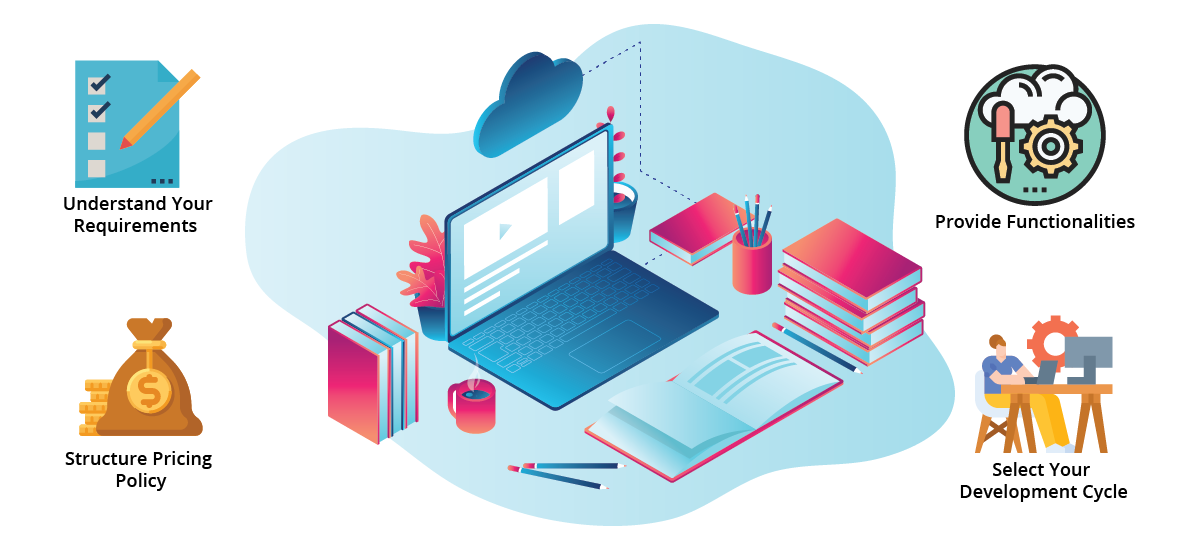
1. Understand the requirements
Understanding the requirements is the basic step in building an e-learning platform. It’s crucial to know the depth of your platform, and what kind of courses you want to add. Ask if you want to capture an industry-specific market like all courses and teachers that are into mathematics, chemistry or so.
Helping a marketplace you garner much more profit even if you go specific subject niche like:
- Computers & Technology.
- Businesses & Entrepreneurship.
- Writing and content creation.
- Arts and crafts.
2. Structure Pricing Policy
Develop a well-priced policy, As it gives you an idea of the revenue sources and how you can build your business either on free or open access to learning.
At times there are platforms that provide certificates that are not always free online learning marketplaces like Udemy or Coursera raise money majorly through these structured paid courses and certificates.
3. Provide Functionalities
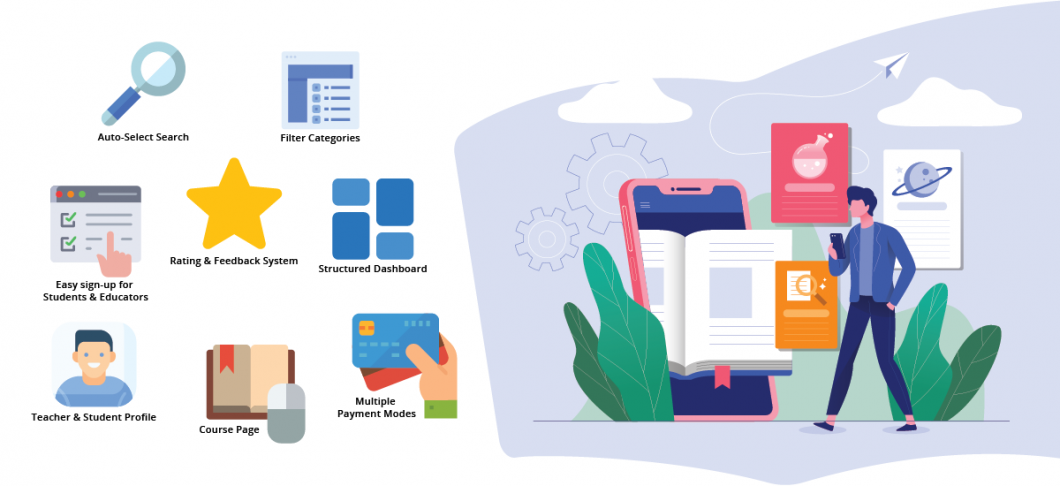
To know and comprehend how to build a website like Udemy, Coursera, or others, you will first need to look closely at the core features of these eLearning platforms. In addition, the functionality mentioned below will help you develop a rich feature-based and optimal eLearning portal.
- Auto-Select Search: Enable users to get their queries answered quickly with the latest advancement in autoselect search features.
- Filter Categories: Provide a well-subjected filter that allows users to filter their requirements at ease. With options like Course type, Topic, language, Features, and others.
- Rating & Feedback System: This feature allows you to know how well your users can connect with your portal and what their response is.
- Easy sign-up for Students & Educators: Provide a smooth registration process that allows the user to easily get access to their requirements without wasting much time on the process of sign-up.
- Teacher & Student Profile: Give an interface for the students and teachers to showcase their profile details. With some key features, It allows for building a good relationship among them.
- Сourse Page: Develop a well-crafted course page that contains the details in a very presentable and interactive way.
- Structured Dashboard: Create a well-structured dashboard that contains all the details of a user’s activity also providing them with analytical data. Including details like courses completed, test results, assignments done, study hours completed.
- Multiple Payment Modes: Provide your users with a more secure, convenient, and multi- payments mode that allows them to make payments at ease.
4. Advanced Features Modern E-Learning Platforms Need
As learner expectations continue to evolve, modern e-learning platforms require more than basic course management and payment capabilities. Advanced features help improve engagement, personalize learning experiences, and increase course completion rates.
- AI-Powered Course Recommendations: Suggest relevant courses based on user interests, learning history, and skill goals, improving course discovery and engagement.
- Personalized Learning Paths: Create customized learning journeys that adapt to individual progress, helping learners focus on the most relevant content.
- Interactive Assessments and Quizzes: Reinforce learning through quizzes, assignments, coding challenges, and knowledge checks while tracking performance.
- Gamification and Achievement Systems: Encourage learner participation through badges, certificates, leaderboards, and milestone rewards.
- Mobile Learning Support: Enable users to access courses, assessments, and learning materials from smartphones and tablets for greater flexibility.
- Learning Analytics and Progress Tracking: Provide detailed insights into course completion rates, study time, assessment scores, and learner engagement.
- Live Classes and Community Features: Support real-time learning through webinars, discussion forums, and peer-to-peer collaboration.
5. Select Your Development Cycle
To build an eLearning website or application you can go with two approaches. One is the scratch build up and the other is pre-built solutions available.
- Custom software development
If you want several services to be provided as well as create a unique setup for user engagement, then custom software development is your best bet. While creating it will require a significant amount of time and careful consideration, the end result will ultimately be exactly what you were looking for.
Developing your website or application under custom development allows you to incorporate any of the requirements.
- Pre-Made Solutions
With the pre-made solutions, you can develop the required system by utilizing the various available options suited for different e-learning platforms already on the market. Additionally, with open-source software, you can benefit from many free plugins that will help you develop your e-learning platform.
6. Technology Architecture for a Scalable E-Learning Platform
Building an e-learning platform requires more than an attractive user interface. The underlying architecture must support thousands of learners, video streaming, assessments, payments, and real-time interactions while maintaining performance and security.
A modern e-learning platform typically consists of the following components:
- Frontend Layer: Provides the user interface for students, instructors, and administrators across web and mobile applications.
- Backend Services: Handle business logic, user management, course enrollment, authentication, and platform operations.
- Cloud Infrastructure: Supports scalability, high availability, and performance during periods of increased user activity.
- Database Management System: Stores user profiles, course content, assessments, progress tracking data, and transaction records.
- Content Delivery Network (CDN): Delivers videos and learning resources faster by distributing content across multiple geographic locations.
- Payment Gateway Integration: Enables secure payment processing for course purchases, subscriptions, and certification fees.
Development phases Involved in Building an eLearning Portal
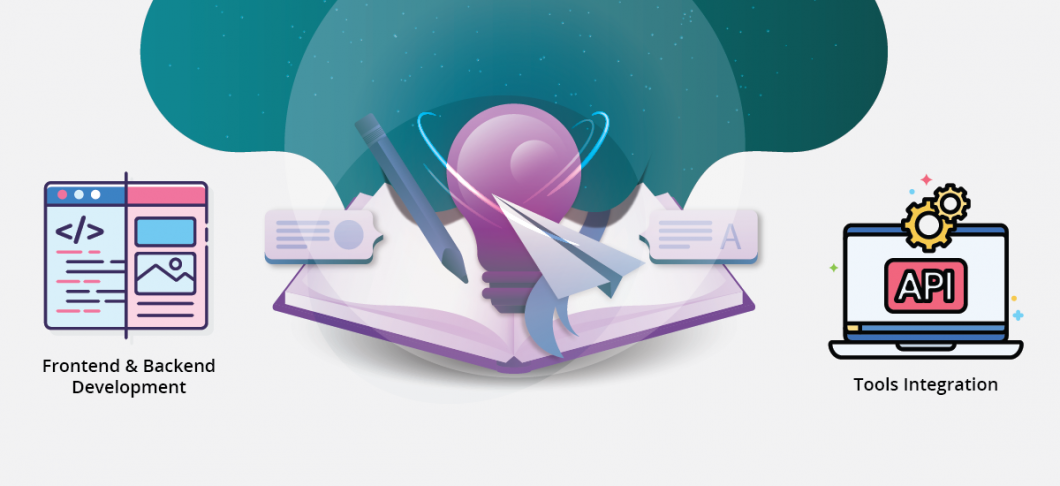
With the prominent market growth of eLearning marketplaces like Udemy and Coursera, the question that arises is the technologies used in their development process. Given the vast amount of technologies available, you can therefore choose the ones that suit you best for developing your platform. To illustrate, here are the three key development phases and the associated technologies:
- Front End Development
With the availability of leading technologies to develop your eLearning architecture, some of the technologies you can utilize include Ajax, Bootstrap, Angular, HTML, and CSS. Furthermore, under front-end development, the focus primarily lies on developing the UI/UX architecture to create your optimal eLearning portal.
- Back End Development
The Back-End development phase focuses on architectural requirements such as server-side handling and database management of the eLearning portal. A few of the technologies that can be utilized under back-end development are Java, Node.js, PHP, .net, and MySQL.
- Integration & Tools
Along with the technologies, there is the availability of many tools and integrations that come in handy for providing your eLearning portal with a defined structure and operational value. For example, Slack, G-Suite, and Salesforce are some of the third-party integrations that you can use for eLearning portal development.
Monetization Models for E-Learning Platforms
The success of an e-learning platform depends not only on its features but also on its ability to generate sustainable revenue. Choosing the right monetization strategy helps platform owners maximize profitability while delivering value to learners and instructors.
Common monetization models include:
- Course Purchase Model: Users pay a one-time fee to access individual courses. This model is widely used by platforms offering specialized or professional training.
- Subscription-Based Learning: Learners pay a monthly or annual subscription fee to access a library of courses. This approach helps generate recurring revenue.
- Freemium Model: Basic courses or learning materials are offered for free, while premium content and advanced features require payment.
- Certification Fees: Learners can access course content for free or at a low cost but pay for industry-recognized certificates upon completion.
- Corporate Training Programs: Organizations purchase training packages for employee development, creating an additional revenue stream.
- Instructor Revenue Sharing: Platform owners earn a percentage of course sales while instructors receive the remaining share of the revenue.
- Sponsored Courses and Partnerships: Educational institutions, brands, or businesses can sponsor courses to reach specific audiences.
Many successful e-learning platforms combine multiple monetization models to diversify revenue sources and support long-term growth.
Key Feature that helps you Build a Scalable e-Learning Platform
In the digital age, e-learning has become a vital tool in education, training, and personal development. As the demand for online learning continues to rise, it is therefore essential for e-learning platforms to be scalable to meet the needs of a growing user base. Moreover, one key feature that can make a significant difference in the scalability of an e-learning platform is dynamic content delivery.
The Importance of Scalability in e-Learning Platforms
Scalability is crucial for e-learning platforms to accommodate an increasing number of users, courses, and resources without compromising performance. A scalable platform can handle growth seamlessly, ensuring a smooth learning experience for users. Without the ability to scale, an e-learning platform may face issues such as slow loading times, system crashes, and poor user experience.
Dynamic Content Delivery: The Game-Changer
Dynamic content delivery is a key feature that can enhance the scalability of an e-learning platform. Unlike static content delivery, which presents the same content to all users regardless of their preferences or behavior, dynamic content delivery tailors the learning experience to each user’s needs.
By leveraging data analytics, machine learning algorithms, and user interactions, e-learning platforms can deliver personalized content recommendations, adaptive learning paths, and real-time updates. This dynamic approach not only improves user engagement and retention but also optimizes resource utilization and system performance.
Implementing Dynamic Content Delivery
To incorporate dynamic content delivery into an e-learning platform, developers need to focus on several essential components:
- Data Analytics: Collecting and analyzing user data to understand preferences, learning patterns, and performance metrics.
- Machine Learning Algorithms: Developing algorithms that can predict user behavior, recommend relevant content, and adapt learning paths based on individual progress.
- Real-time Updates: Ensuring that content updates, course modifications, and system adjustments are implemented seamlessly and quickly.
- Scalable Infrastructure: Building a robust and flexible infrastructure that can support increased traffic, storage, and processing requirements.
Are you ready to take your e-learning platform to the next level? If so, contact HashStudioz today and let our team of experts help you build a successful platform that rivals the likes of Udemy and Coursera. With our proven track record of delivering high-quality solutions, we can help you create a dynamic and engaging learning experience for your users. In addition, let’s work together to make your e-learning platform a success!
Emerging Trends in E-Learning Platform Development
The e-learning industry continues to evolve as organizations adopt new technologies to improve learner engagement, personalization, and learning outcomes. Businesses planning to build an e-learning platform should consider the following trends when designing their long-term strategy.
AI-Powered Learning Assistants
Artificial intelligence is transforming online education through virtual tutors, automated content recommendations, instant feedback systems, and personalized learning support. AI assistants help learners find relevant resources and improve learning efficiency.
Adaptive Learning Experiences
Modern platforms increasingly use learner behavior and performance data to create personalized learning paths. Adaptive learning systems adjust course content and recommendations based on a learner’s progress and skill level.
Microlearning Content
Short, focused lessons are becoming more popular among working professionals and corporate learners. Microlearning improves knowledge retention and allows users to learn in smaller, manageable sessions.
Mobile-First Learning
With a growing percentage of learners accessing courses through mobile devices, platforms must deliver responsive experiences across smartphones, tablets, and desktops.
Social and Collaborative Learning
Discussion forums, peer groups, live webinars, and collaborative projects help create interactive learning environments that improve engagement and knowledge sharing.
FAQs
1. What does it cost to build an e-learning platform like Udemy or Coursera?
The cost of developing an e-learning platform depends on factors such as features, technology stack, integrations, scalability requirements, and development approach. A basic platform requires fewer resources, while enterprise-grade solutions with AI-powered recommendations, analytics, and mobile applications require a larger investment.
2. How long does it take to develop an e-learning platform?
Development timelines vary based on project complexity. A basic MVP can take a few months, while a fully featured platform with instructor management, payment integration, mobile support, and advanced analytics may require significantly more development time.
3. Which technologies are commonly used for e-learning platform development?
Popular technologies include Angular, React, HTML, CSS, Java, Node.js, PHP, .NET, MySQL, cloud services, content delivery networks (CDNs), and third-party integrations for payments, communication, and analytics.
4. How do e-learning platforms generate revenue?
E-learning platforms commonly generate revenue through course purchases, subscription plans, certification fees, corporate training programs, instructor revenue sharing, sponsored content, and premium learning resources.
5. What features are essential for an e-learning platform?
Essential features include course management, user profiles, search and filtering, payment processing, progress tracking, ratings and reviews, analytics dashboards, mobile accessibility, and personalized learning recommendations.