


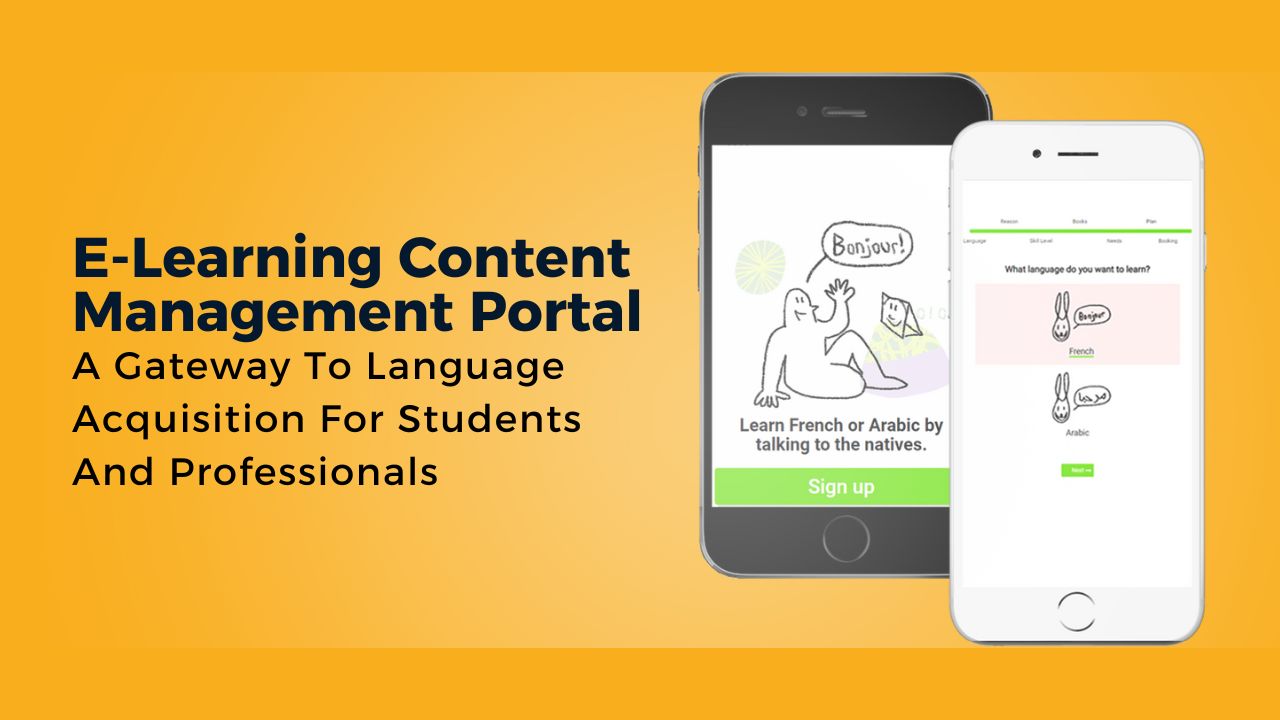
Have you ever wondered how modern AI-powered e-learning platforms are transforming language acquisition for Arabic and French learners at scale? Let’s explore how E-Learning Content Management Portals (ECMPs) are reshaping language learning in the AI-driven 2026 EdTech landscape.
Modern language learning platforms are reshaping how students and professionals acquire multilingual skills in today’s AI-driven education landscape. As global education, remote learning, and enterprise upskilling continue to grow, the demand for AI-powered learning, personalized learning paths, and cloud-based e-learning platforms is increasing rapidly.
Traditional language learning methods often struggle with flexibility, learner engagement, and scalability. Modern EdTech platforms now use adaptive learning, mobile learning, virtual classrooms, and learning analytics. It delivers more interactive and personalized learning experiences.
This is where an E-Learning Content Management Portal (ECMP) becomes essential. An ECMP is a scalable multilingual learning platform that helps organizations create, manage, and deliver digital learning content efficiently. For globally important languages like Arabic and French, ECMPs support structured language acquisition through interactive lessons, multimedia content, and flexible online access for students and professionals worldwide.
Table of Contents
What is an E-Learning Content Management Portal (ECMP)?
An E-Learning Content Management Portal (ECMP) is a cloud-based platform used to create, manage, deliver, and track digital learning content. Modern ECMPs support AI-powered learning, adaptive learning paths, mobile learning, multilingual content, and real-time learning analytics to improve learner engagement and language acquisition.
Why Consider an ECMP for Arabic & French Language Learning?
Arabic and French remain among the most influential languages for global education, international business, tourism, and cross-border communication. As multilingual workforce demand and online learning adoption continue to rise in 2026, modern E-Learning Content Management Portals (ECMPs) help students and professionals develop practical language skills. These skills are delivered through structured, interactive, and skill-based learning experiences.
- Structured Learning Paths: ECMPs support guided, skill-based progression and self-paced training based on proficiency levels, helping learners improve fluency, grammar, and communication skills more effectively.
- Interactive Learning Experience: Modern ECMPs use multimedia lessons, gamified learning, pronunciation practice, quizzes, and automated assessments to increase learner engagement and knowledge retention.
- Support for Arabic & French Variations: Advanced multilingual learning platforms can support different Arabic dialects and regional French variations, enabling more practical and localized language acquisition.
- Flexible Mobile Learning: With cloud-based e-learning and mobile accessibility, learners can access virtual classrooms, lessons, and assessments anytime and from any device. This makes language learning more flexible, accessible, and scalable.
Benefits of ECMPs for Students
- Improved Learning Outcomes: Modern ECMPs use AI-powered learning and adaptive learning paths to personalize content delivery, helping students achieve faster and more effective language acquisition compared to traditional methods.
- Stronger Language Proficiency: Interactive exercises, pronunciation practice, and gamified learning improve vocabulary retention, grammar accuracy, and spoken fluency through consistent engagement.
- Exam & Certification Readiness: Many platforms integrate AI-driven assessments and structured test simulations to help students prepare for Arabic and French proficiency exams with real-time performance feedback.
- Competitive Academic Edge: Mastery of high-demand languages like Arabic and French enhances academic profiles, improves global admission opportunities, and builds future-ready communication skills.
Benefits of ECMPs for Professionals
- Career Growth & Global Opportunities: Adding Arabic or French language skills enhances employability in international markets, global business roles, and cross-border communication environments.
- Continuous Professional Upskilling: ECMPs enable flexible, self-paced learning supported by mobile learning and cloud-based access, making upskilling easier for working professionals.
- Better Business Communication: Professionals can improve client interactions, negotiation skills, and collaboration with multilingual teams using structured language learning systems.
- Cultural & Market Understanding: Modern ECMPs provide contextual learning experiences that improve cultural awareness, helping professionals navigate international business etiquette more effectively.
Developing an ECMP for Arabic & French Language Learning: Technical Considerations
Building a modern E-Learning Content Management Portal (ECMP) requires a scalable and AI-ready architecture. This architecture must support personalization, multilingual content delivery, and real-time learning analytics.
In 2026, ECMP platforms are no longer basic LMS systems. They operate as intelligent, AI-driven learning ecosystems. These ecosystems adapt content dynamically based on learner behavior and performance data.
1. Cloud-Based Scalable Architecture
Modern ECMPs are built on cloud infrastructure (AWS, Azure, or GCP) to ensure high availability, scalability, and global content delivery. This supports seamless access for learners across regions while handling large volumes of multimedia learning content.
2. AI-Powered Personalization Engine
AI-driven systems analyze learner behavior, performance, and engagement patterns to deliver adaptive learning paths. These engines enable personalized learning experiences, recommending lessons, exercises, and assessments based on individual progress.
3. Multilingual Content Management System
A strong ECMP must support multilingual content architecture, including right-to-left (RTL) languages like Arabic. This ensures accurate rendering, localization, and culturally relevant learning experiences for global learners.
4. Interactive Learning & Communication Layer
Modern platforms integrate virtual classrooms, video streaming, chat systems, and gamified learning modules. These features improve engagement and simulate real-world conversational practice for languages like Arabic and French.
5. Learning Analytics & Performance Tracking
Advanced ECMPs use learning analytics dashboards to track learner progress, completion rates, skill gaps, and engagement metrics. This data enables continuous improvement of content and teaching strategies.
6. Secure & API-Driven Ecosystem
Security is critical in EdTech platforms. ECMPs implement role-based access control, encrypted data storage, and API integrations with third-party tools like payment gateways, video conferencing systems, and AI services.
7. Mobile-First Learning Experience
With the rise of mobile learning, ECMPs are optimized for smartphones and tablets, ensuring learners can access lessons, quizzes, and AI feedback anytime, anywhere.
Building a Secure and Scalable ECMP: Development Approach & Best Practices
Developing a modern E-Learning Content Management Portal (ECMP) requires strong expertise in AI integration, cloud architecture, multilingual systems, and scalable SaaS development. A well-built ECMP must be secure, high-performing, and capable of delivering personalized learning experiences at scale.
Partnering with an experienced EdTech or e-learning development company helps organizations accelerate product development. It also ensures best practices in architecture, UX, and AI-driven learning systems.
1. Requirement Analysis & Solution Planning
The development process begins with understanding business goals, learner personas, and training objectives. This phase defines system architecture, feature prioritization, and learning outcomes for Arabic and French language platforms.
2. Custom ECMP & LMS Development
Modern ECMPs are built as flexible platforms that can function independently or integrate with existing Learning Management Systems (LMS). This ensures scalability, modularity, and long-term adaptability for evolving EdTech needs.
3. Multilingual & RTL Content Engineering
A critical requirement for Arabic and French learning platforms is multilingual content support, including right-to-left (RTL) rendering for Arabic. This ensures accurate localization, cultural relevance, and seamless user experience across languages.
4. AI-Powered Learning Feature Integration
Advanced ECMPs integrate AI-driven features such as personalized learning paths and automated assessments. They also include intelligent recommendations and performance-based content adaptation to improve learner engagement and retention.
5. Mobile-First & Cross-Platform Learning Experience
Mobile learning is becoming dominant in 2026. ECMPs are designed with responsive interfaces and companion mobile applications. This ensures anytime and anywhere access to learning content.
6. Security, Scalability & Cloud Infrastructure
Enterprise-grade ECMPs prioritize data security, encryption, and role-based access control. Cloud-based infrastructure ensures scalability, high availability, and seamless performance even under heavy user loads.
A Case Study in Success: HashStudioz Develops a Thriving E-Learning Portal for Arabic & French Language Learning
Look no further than HashStudioz’s proven track record! In a previous project, they successfully developed a user-friendly E-learning portal for a client offering online personalized training sessions for Arabic and French language learning [Case Study: E-Learning Portal for Arabic & French Learning]. This portal allows students to:
- Search for and book online Arabic and French lessons based on their specific needs and preferences.
- Choose from a pool of qualified tutors with expertise in various language proficiency levels.
- Access interactive lessons, multimedia content, and personalized learning materials.
- Track their progress and measure their language learning improvement over time.
The success of this project highlights HashStudioz’s capabilities in developing effective ECHPs specifically tailored for Arabic and French language learning.
Conclusion: ECMPs as the Future of Language Learning
E-Learning Content Management Portals (ECMPs) are becoming a core part of modern digital education by enabling AI-powered learning, multilingual accessibility, and personalized learning experiences at scale. For languages like Arabic and French, ECMPs provide a structured and flexible approach to language acquisition that supports both academic and professional growth.
As demand for cloud-based e-learning, adaptive learning systems, and learning analytics continues to rise in 2026. ECMPs will play a critical role in shaping the future of global education and workforce upskilling.
HashStudioz: Your Partner in Building World-Class E-Learning Solutions
HashStudioz is a leading provider of online e-learning marketplace solutions. With their extensive experience, technical expertise, and commitment to quality, HashStudioz can help you develop a secure, scalable, and engaging ECMP that empowers learners of all levels to achieve their Arabic and French language learning goals.
Contact HashStudioz today to discuss your ECMP project and explore how they can help you unlock the potential of e-learning for Arabic and French language acquisition.
FAQs
1. What is an E-Learning Content Management Portal?
It’s an online platform that organizes and delivers educational content, enabling users to learn and track progress in language acquisition.
2. How does an E-Learning Portal help with language acquisition?
It offers interactive content, personalized learning paths, and real-time feedback to enhance language learning at your own pace.
3. What features does an E-Learning Portal for language learning have?
Key features include a user-friendly interface, multilingual support, interactive lessons, progress tracking, and personalized learning.
4. Who benefits from an E-Learning Content Management Portal?
Students and professionals can both benefit, with students improving academic skills and professionals enhancing their career-related language proficiency.
5. What technologies are used in these portals?
AI for personalized learning, cloud-based storage, data analytics for progress tracking, and interactive tools to create a seamless learning experience.